
The problem
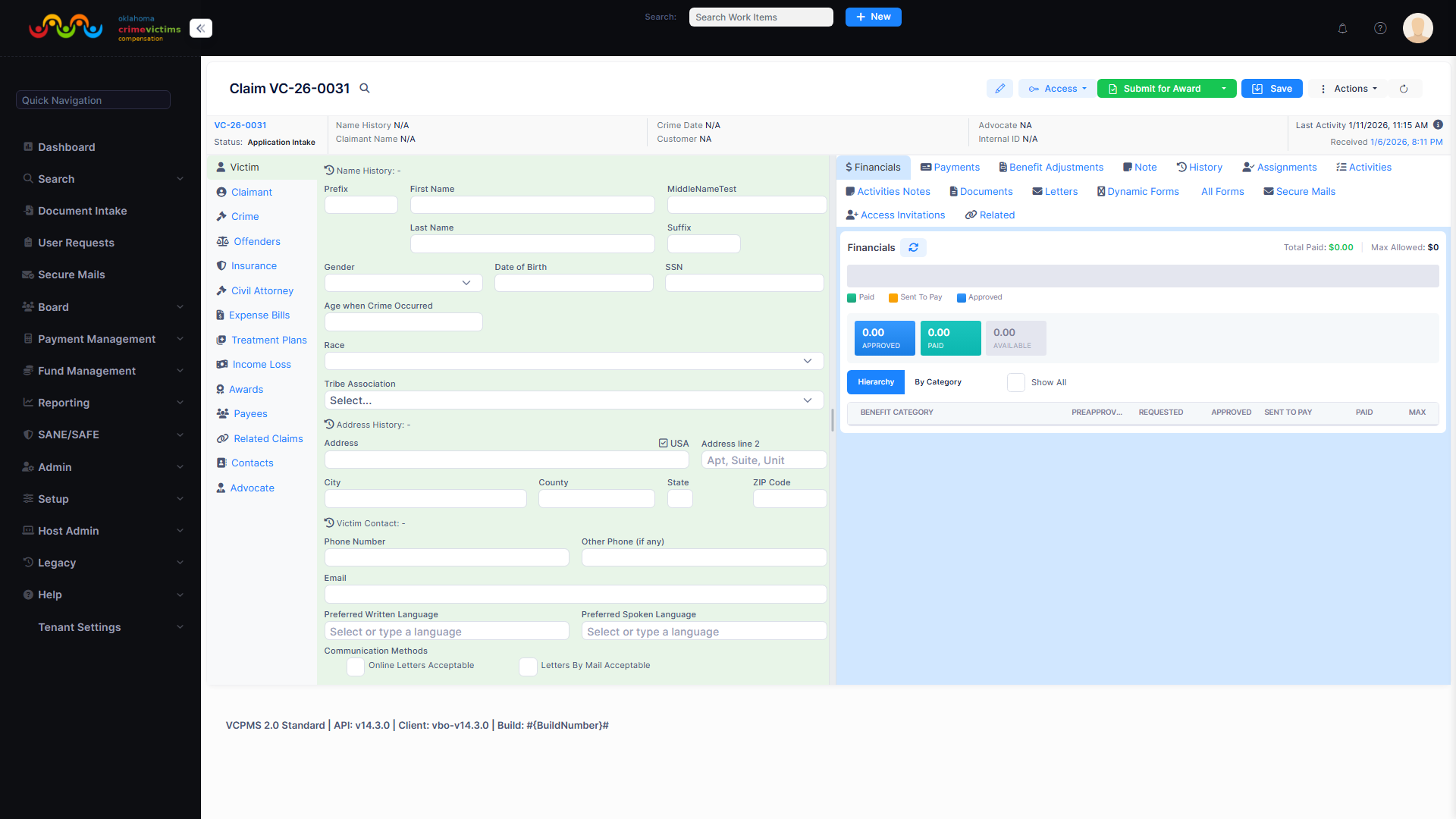
A victim-compensation claim touches many people: the victim, their advocate, the hospital or counselor who treated them, the police who took the report, and the analysts who decide and pay it. Each needs a different view, different permissions and different paperwork.
States had been running this on single-purpose systems that were expensive to change and hard to share.
One core, five doors
We built one shared core — claims, payments, documents, rules — and put a dedicated portal in front of it for each kind of user.
- VCPOfficeProgram staff
- VCPOnlineVictims
- VCPProviderProviders
- VCPAdvocateAdvocates
- VCPAgencyLaw enforcement
Shared core · claims · payments · documents · rules
Configured, not forked
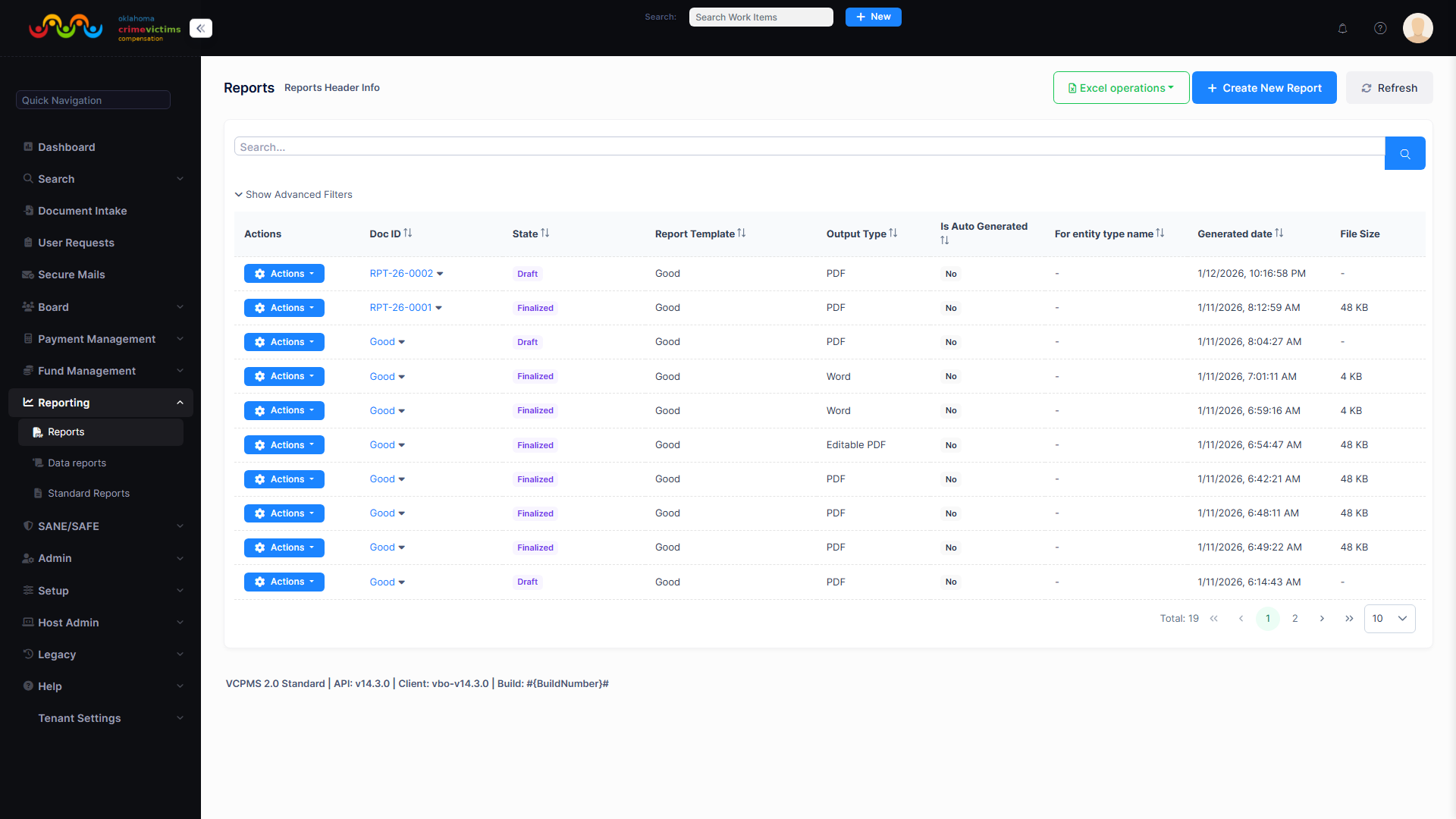
Every state’s law is different. Instead of a custom copy per state, each program configures its own rules — and every core upgrade rolls forward to all of them.
- Benefit caps
- Eligibility rules
- Document taxonomies
- VOCA reporting
State by state
- 2014–15California. CaRES built for the Victim Compensation Board — the foundation VCPMS grew from. Still in production.
- 2019Oklahoma. Victim portal live; back-office migration in progress.
- 2023Maine. Full five-portal deployment, branded locally as CAMS.
- NowAlaska. Implementation led by partner Heart4Victims on the ASDCom-built platform.
Under the hood
- Multi-tenant
- One codebase serves every state, each with its own configuration and data.
- 36 report types
- Operational, financial and federal reporting generated from the same data.
- Data conversion
- Purpose-built tooling to move each state's legacy records in, verified before cutover.
- Tested nightly
- CI/CD pipelines with automated end-to-end browser tests on every build and every night.
- Documents
- Bulk upload, classification, generated letters and Outlook integration.
- Current stack
- .NET 10, Angular 21 and SQL Server — kept current, not left to age.